Selected papers
Twelve papers spanning the questions above, each with a note on what it contributed.
Maizels RJ, Briscoe J
Gene regulatory networks: from correlative models to causal explanations
Nature Reviews Genetics 27(6):485-498 (2026)
Argues that gene regulatory networks have become statistical descriptions rather than mechanistic explanations, and sets out three principles for building models that recover causation.
Rito T, Libby ARG, Demuth M, Domart MC, Cornwall-Scoones J, Briscoe J
Timely TGFβ signalling inhibition induces notochord
Nature 637(8046):673-682 (2025)
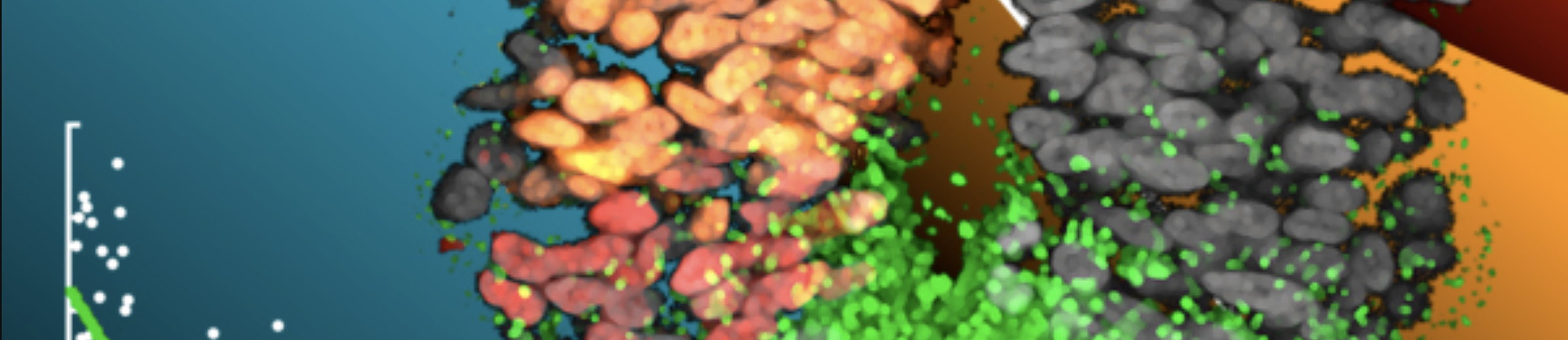
Built a three-dimensional in vitro model of human trunk development containing a notochord, by inhibiting TGFβ signalling at the right moment. It supplies a component missing from earlier stem cell models.
Delás MJ, Kalaitzis CM, Fawzi T, Demuth M, Zhang I, Stuart HT, Costantini E, Ivanovitch K, Tanaka EM, Briscoe J
Developmental cell fate choice in neural tube progenitors employs two distinct cis-regulatory strategies
Developmental Cell 58(1):3-17.e8 (2023)
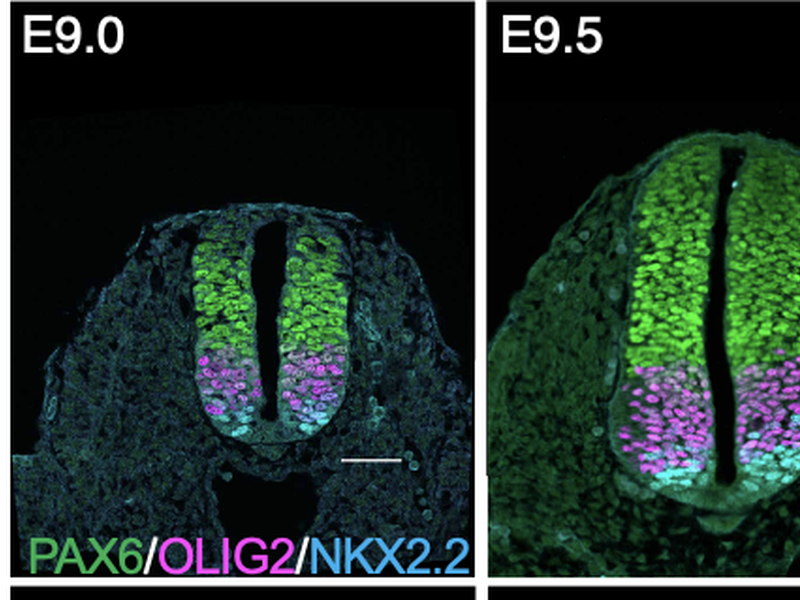
Identified two distinct cis-regulatory strategies used by neural progenitors during fate choice, one based on differential binding and one on differential chromatin accessibility.
Sáez M, Blassberg R, Camacho-Aguilar E, Siggia ED, Rand DA, Briscoe J
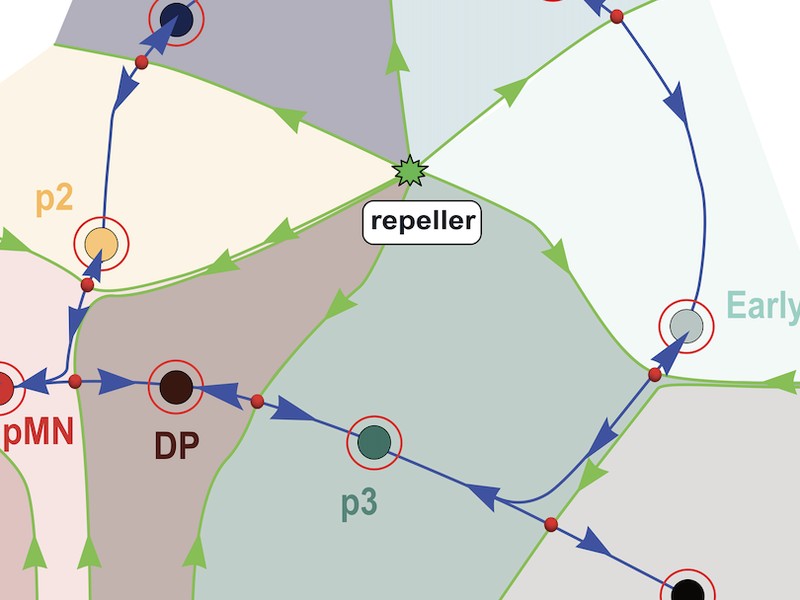
Statistically derived geometrical landscapes capture principles of decision-making dynamics during cell fate transitions
Cell Systems 13(1):12-28.e3 (2022)
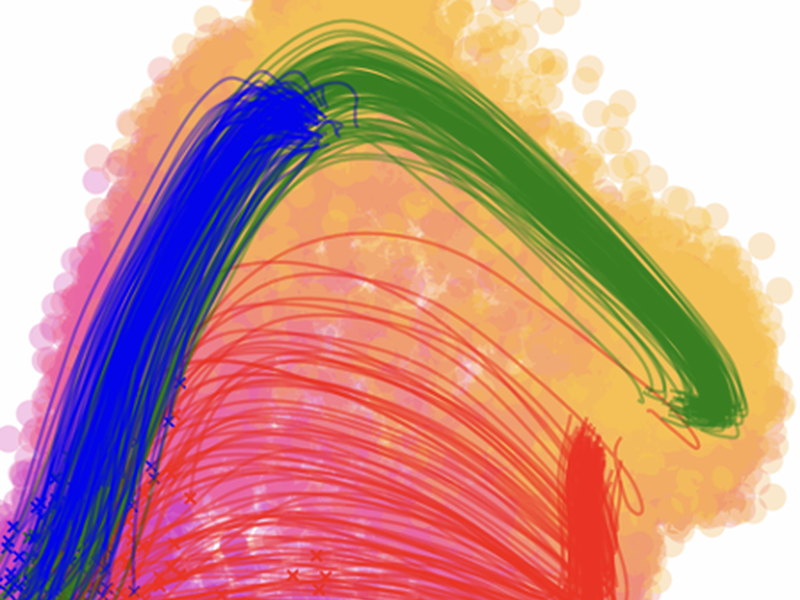
Fitted geometric landscape models directly to single-cell data, showing that cell fate decisions can be described by a small number of decision structures. It made Waddington's metaphor quantitative.
Rayon T, Stamataki D, Perez-Carrasco R, Garcia-Perez L, Barrington C, Melchionda M, Exelby K, Lazaro J, Tybulewicz VLJ, Fisher EMC, Briscoe J
Species-specific pace of development is associated with differences in protein stability
Science 369(6510):eaba7667 (2020)
Traced the two- to three-fold difference in developmental tempo between human and mouse to differences in protein stability, offering a concrete molecular handle on a long-standing puzzle.
Delile J, Rayon T, Melchionda M, Edwards A, Briscoe J, Sagner A
Single cell transcriptomics reveals spatial and temporal dynamics of gene expression in the developing mouse spinal cord
Development 146(12):dev173807 (2019)
A single-cell atlas of the developing mouse spinal cord that resolved progenitor domains and their neuronal output in space and time. It remains a widely used reference dataset.
Metzis V, Steinhauser S, Pakanavicius E, Gouti M, Stamataki D, Ivanovitch K, Watson T, Rayon T, Mousavy Gharavy SN, Lovell-Badge R, Luscombe NM, Briscoe J
Nervous system regionalization entails axial allocation before neural differentiation
Cell 175(4):1105-1118.e17 (2018)
Demonstrated that cells are assigned an axial identity before they commit to a neural fate, reversing the assumed order of regionalisation and differentiation in the nervous system.
Zagorski M, Tabata Y, Brandenberg N, Lutolf MP, Tkacik G, Bollenbach T, Briscoe J, Kicheva A
Decoding of position in the developing neural tube from antiparallel morphogen gradients
Science 356(6345):1379-1383 (2017)
Showed that opposing morphogen gradients allow cells to determine position with far greater precision than either gradient alone. It quantified how much positional information a tissue actually carries.
Kutejova E, Sasai N, Shah A, Gouti M, Briscoe J
Neural progenitors adopt specific identities by directly repressing all alternative progenitor transcriptional programs
Developmental Cell 36(6):639-653 (2016)
Found that neural progenitors acquire identity by repressing every alternative programme, not by activating their own. It inverted the standard reading of how transcription factors specify cell type.
Gouti M, Tsakiridis A, Wymeersch FJ, Huang Y, Kleinjung J, Wilson V, Briscoe J
In vitro generation of neuromesodermal progenitors reveals distinct roles for Wnt signalling in the specification of spinal cord and paraxial mesoderm identity
PLoS Biology 12(8):e1001937 (2014)
Generated neuromesodermal progenitors from pluripotent stem cells and showed how Wnt signalling steers the choice between spinal cord and paraxial mesoderm. This is the basis of the lab's in vitro spinal cord work.
Kicheva A, Bollenbach T, Ribeiro A, Valle HP, Lovell-Badge R, Episkopou V, Briscoe J
Coordination of progenitor specification and growth in mouse and chick spinal cord
Science 345(6204):1254927 (2014)
Measured growth and patterning together in mouse and chick, and showed the two are coordinated rather than independent. It made tissue size and proportion a quantitative problem rather than a descriptive one.
Balaskas N, Ribeiro A, Panovska J, Dessaud E, Sasai N, Page KM, Briscoe J, Ribes V
Gene regulatory logic for reading the Sonic Hedgehog signaling gradient in the vertebrate neural tube
Cell 148(1-2):273-284 (2012)
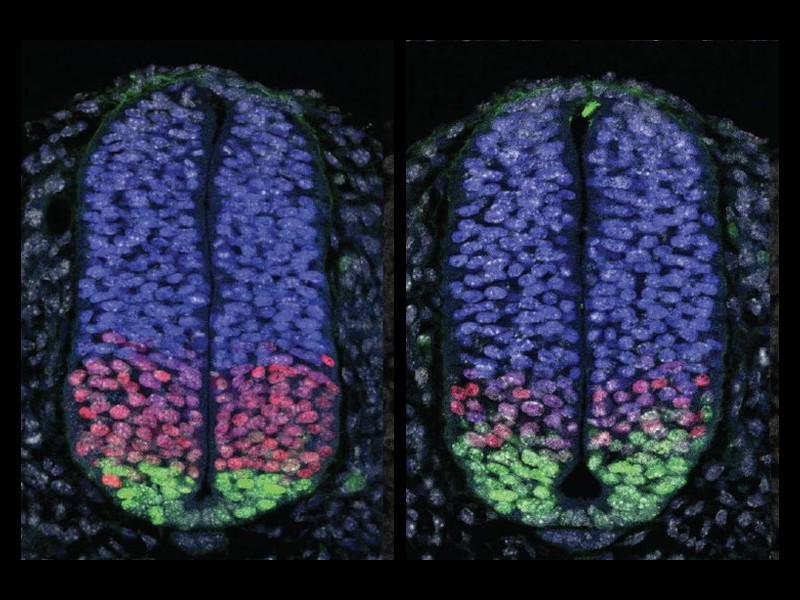
Showed that the response to the Sonic Hedgehog gradient is produced by a gene regulatory network of cross-repressive transcription factors, not by cells reading concentration directly. This established the network as the unit of explanation for neural tube patterning.
All 121 publications →